Cwm Penmachno Quarries
Credit: Some of these contents have been taken from a website that is no longer live. If the original writer would like to contact me I will credit them. I didn't want this work to be lost.
No one is sure when Rhiw Machno Quarry was opened, but according to "Llyfr Gethin", the first Quarry in the area was opened in 1819 (Rhiwbach Quarry). At one time, there used to be 4 Quarries working in the vicinity when the industry was in its prime. Today of course no Quarry in Cwm is operational, the last one closing in 1962.
Below is the entrance to the Quarry as it looked when the wall was intact.
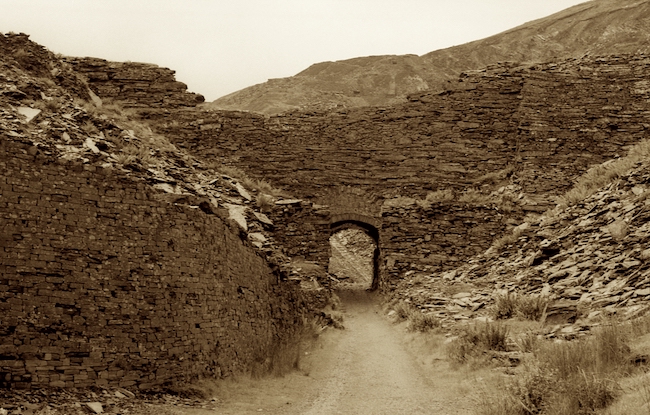
The entrance to Rhiw Machno Quarry, and also to the path that leads up to Rhiwbach Quarry.
In the following pictures, you will see a snapshot of the Machno Quarry — today and as it was in the past.
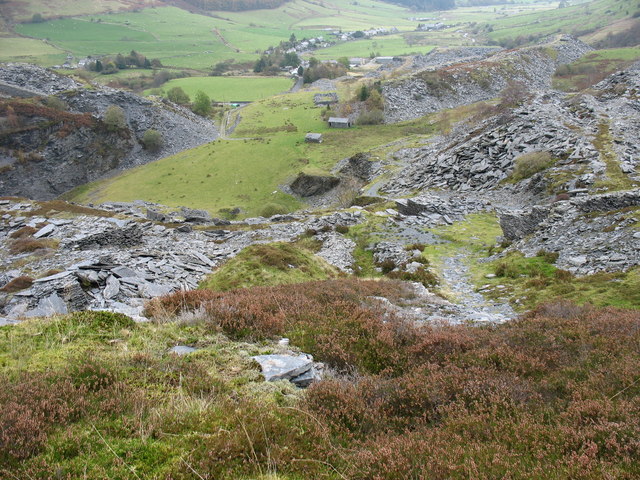
View of the infilled main pit from the south. The outline of the northern mill can be seen just beyond the two remaining buildings
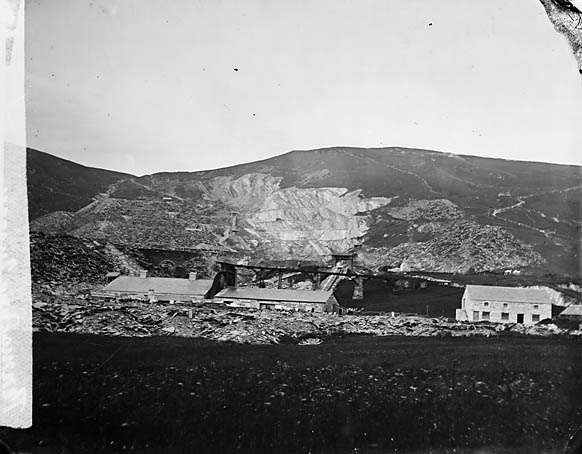
The Northern Mill below the quarry as it was, which is now farm buildings
In this close up taken in the 1980's you can see the ruins of the quarry buildings; The Quarry Office, the mills and the tower at the top of the main incline:
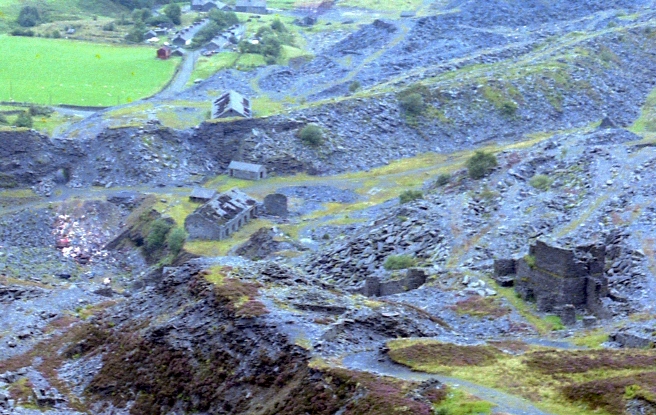
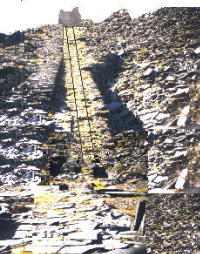
The below incline was used to bring the rock down to the mill from the top of the mountain. It was very dangerous working on the incline as the trucks sometimes turned over and went off the rails. Several injuries were caused to people working here.
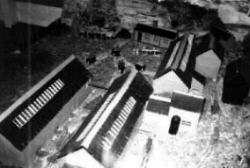
Models of the three mills, the Quarry Office and the power hut:
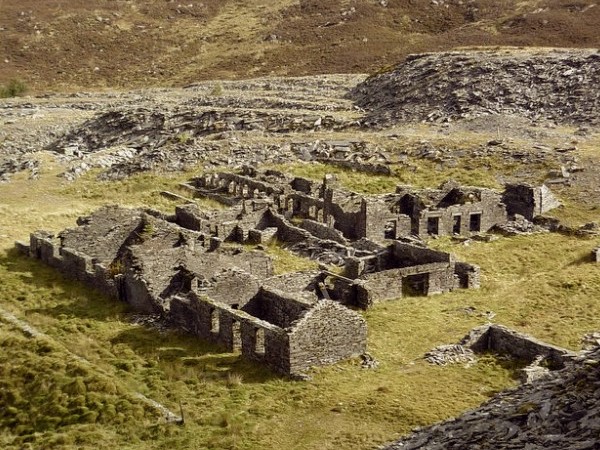
By following the river to the top, we come to Rhiwbach Quarry, but first, we see Rhiwbach Village, where families used to dwell in the old days. At one stage, a library was even built in the village.
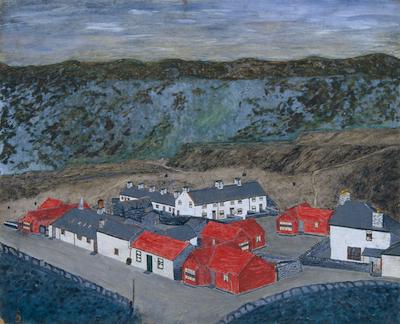
Below is a painting of the village c.1900
In 1908, the population was sufficient to support a school. The school teacher Mrs Kate Hughes from Blaenau Ffestiniog, travelled the 3 miles to the school in an empty slate wagon and travelled back down in a "wild car" at the end of the day. (A wild car is somewhat akin to a skateboard on rollers with a wheeled outrigger, which ran along the tramway tracks). The school closed in 1913 as a result of the wartime closure of the quarry.
In 1938, over 90 men worked in Rhiw Machno Quarry. The Quarry depended wholly on the water from Penrhiw River to turn the gigantic machinery. A large volume of water was needed to keep the Quarry going for eight hours a day. By night, they would close off the pipes to save the water in the lake, and overnight the water would gather in the lake, ready for use in the morning.
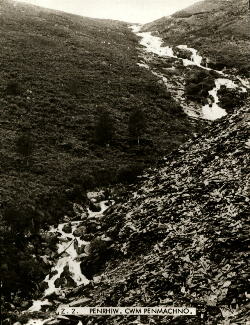
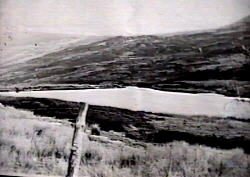
The dam on Penrhiw lake failed after the quarry closed and much of the water ran down the mountain.
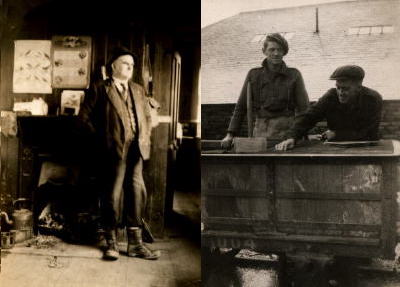
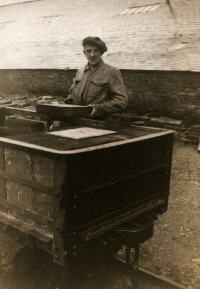
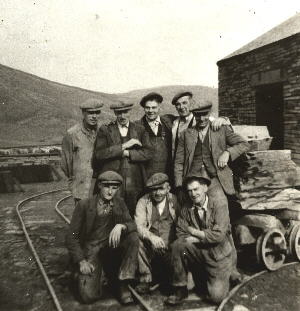
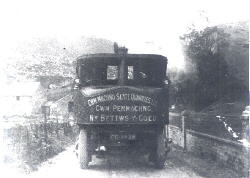
Some of the Quarry Workers
(below left) Emlyn Davies of Cwm Penmachno, one of the officers of the quarry, inside the Office at Rhiwbach. In the 1940's, he was the bandmaster of Machno Silver Band, and also the organist at Shiloh Chapel.
(below right) Workers at Rhiwbach, namely Gwyn Jones from Cwm Penmachno and Evan Owen Roberts from Penmachno. They are standing by a truck carrying slate, destined for all corners of the land.
(below left) Two Quarrymen from Cwm, Robert Einion Jones and Jack Hughes. They were also members of the local Brass Band.
(below right) is a picture of Moi Williams, the Blacksmith, a native of Penmachno. He was the Quarry's Smith, responsible for making and maintaining the tools and machinery in top-class condition.
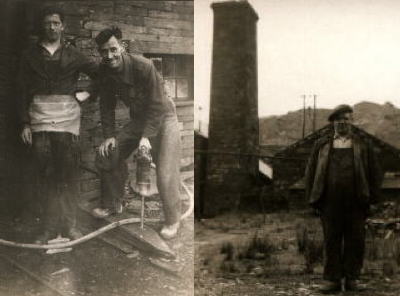
(below) Elwyn Griffiths from Penmachno, known to everyone as "Sprig". He was well known as an able footballer, one of the best at the time.
Further images of the ruins of various parts of the quarry can be found on this slate industry historical site
http://www.jgd.org.uk/rotwsi/cwmmachno01.html